A crash can take less than a second. The questions that follow can consume weeks: Where was the vehicle? Who was driving? What happened immediately before impact? Was emergency help offered? Was the asset moved, repaired, or taken out of service at the right time? Vehicle crash incident documentation gives fleet, rental, dealership, and insurance teams a defensible record before memories fade and evidence fragments.
For operators managing dozens, hundreds, or thousands of vehicles, a police report and a driver statement are necessary but rarely sufficient. They arrive late, reflect only part of the event, and cannot show the vehicle’s condition, location, behavior, or status across the entire incident timeline. The operational advantage comes from verified data that connects the event to a specific vehicle, a specific time, and a clear sequence of actions.
Why crash records fail when teams need them most
Many incident files begin as a collection exercise. A manager calls the driver, requests photos, finds a rental agreement, checks a GPS screen, and waits for repair estimates or a police report. Each source may be useful. Together, they can still leave critical gaps.
The issue is not simply missing information. It is the lack of a shared source of truth. A driver’s account may change as details become clearer. Vehicle location may be overwritten or unavailable at the moment it matters. Maintenance teams may not learn of the crash until the vehicle returns. Claims teams may receive incomplete records after key evidence has disappeared.
That delay carries a measurable cost. Vehicles remain unavailable longer. Claims take longer to assess. Disputes become harder to resolve. Safety leaders cannot identify recurring patterns, and executives lack confidence that their incident process is being followed consistently.
A stronger approach treats documentation as part of the response itself, not paperwork completed after the fact.
What complete vehicle crash incident documentation should capture
The best incident record is chronological, verifiable, and usable by more than one department. It should establish what happened, show what the organization did next, and preserve the evidence needed for claims, safety review, repair decisions, and compliance.
The event timeline
Start with the basics: the vehicle identity, date and time, exact or near-exact location, route context, and the event trigger. When connected-vehicle data is available, it can add speed, direction of travel, harsh braking, impact signals, and other relevant driving behavior around the event.
Telemetry does not replace a formal investigation or determine fault on its own. Road conditions, other vehicles, driver actions, and local reporting requirements still matter. But timestamped vehicle data provides an independent reference point. It helps teams compare accounts against the physical record rather than relying on recollection alone.
Driver, vehicle, and scene information
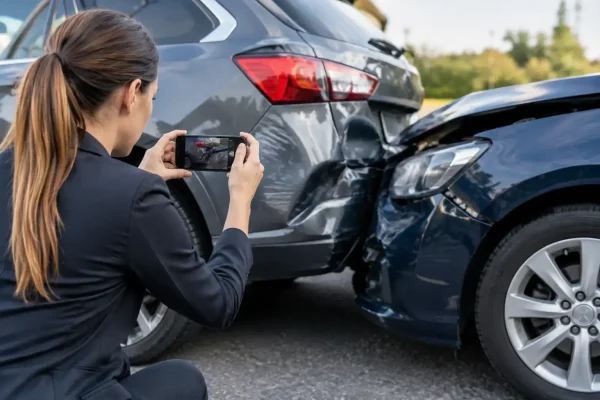
The record should identify the authorized driver or operator, vehicle VIN or unit number, assignment details, and current mileage. It should also capture visible damage, photos, witness contact information when available, police report details, towing information, and whether the vehicle was safe to operate.
For rental operators, this information should connect to the reservation and handoff record. For commercial fleets, it should connect to the driver, job, and route assignment. For dealerships managing loaners or service vehicles, it should connect to the customer and vehicle custody trail. Context prevents teams from having to rebuild the story later.
Response and notification actions
A crash record should show when the alert was received, who was notified, whether the driver was contacted, and whether emergency support was offered or dispatched. This is both a safety requirement and an accountability requirement.
Automated alerts reduce the risk that an event sits unnoticed because a driver is unable, unwilling, or unsure how to report it. Yet automation must be matched with a defined escalation path. A low-confidence event may require a callback and review. A severe verified event may warrant immediate emergency response and rapid removal of the vehicle from service.
Post-crash asset decisions
Documentation should continue after the roadside event. Record the vehicle’s tow destination, repair authorization, inspection outcome, parts and labor status, return-to-service approval, and any maintenance findings related to the collision.
This is where disconnected systems often create a blind spot. The claims file may show a crash, while the maintenance system has no clear reason for a repair. The fleet system may show a vehicle available even though it is awaiting inspection. A continuous record keeps safety, operations, finance, and customer-facing teams aligned.
Verified data changes the economics of an incident
The goal is not to create a longer incident report. It is to reduce uncertainty quickly enough to make better decisions.
For a rental fleet, verified crash information can help separate a routine damage claim from an event requiring immediate escalation. It can support faster customer communication, more accurate loss-of-use calculations, and a cleaner record when a dispute reaches a claims team.
For commercial fleet operators, the same data can expose risk patterns across routes, vehicles, and driver cohorts. One crash is an event. A cluster of harsh braking, speeding, or repeated impacts at the same location may point to a training issue, route hazard, vehicle condition concern, or policy gap.
For dealerships, documented incidents protect the value and service history of loaners, test-drive units, and customer vehicles in custody. For insurers, the benefit is a clearer timeline with fewer manual handoffs. The common outcome is lower administrative friction and a stronger foundation for decisions that carry financial and legal consequences.
Build the process before the next crash
Technology is most effective when the operating process is clear. Teams should define ownership for incident intake, driver contact, emergency escalation, vehicle disposition, evidence review, claims submission, and final closure. If nobody owns the handoff, the record will break at the handoff.
Set documentation standards based on incident severity. A minor parking-lot impact may require photos, driver confirmation, and inspection scheduling. A high-severity collision may require real-time notification, emergency response coordination, telematics review, leadership escalation, insurer notification, and a formal return-to-service hold. The process should be proportional, but it should never be improvised.
Retention also matters. Keep the original event data, not just a manually written summary. Notes are valuable, but they are interpretations. Timestamped source data, photos, inspection records, notifications, and repair activity create a more credible record when questions arise months later.
From crash alert to Digital Truth Layer
A disconnected crash alert is just another notification. A connected incident record becomes part of the vehicle’s operational history.
TrueDNA’s vehicle intelligence platform is designed to create that continuity through a Digital Truth Layer for every connected vehicle. Crash verification, IncidentIQ emergency response and documentation, GPS context, driving behavior, maintenance activity, and vehicle status can be brought into one operational view. Instead of chasing evidence across separate tools, teams can work from a record that follows the vehicle through the event and beyond it.
That distinction matters when the right next step is not obvious. A crash signal may be false, minor, or severe. The response depends on verified information, the people involved, the vehicle’s condition, and the operator’s duty of care. A platform should help teams act with speed without pretending that every incident has the same answer.
Make every record useful after the claim closes
The value of documentation does not end when a claim is paid or a repair is completed. Closed incidents should improve the next decision. Review the time between event detection and driver contact, the time to remove unsafe vehicles from service, the completeness of evidence, repair-cycle delays, and repeat risk indicators.
Use those findings to refine training, update escalation rules, improve customer communication, and identify vehicles or operating conditions that deserve closer attention. A well-documented crash should not become a forgotten file. It should become verified intelligence that protects the next driver, preserves the next asset, and gives every operator a clearer view of what happened when it mattered most.