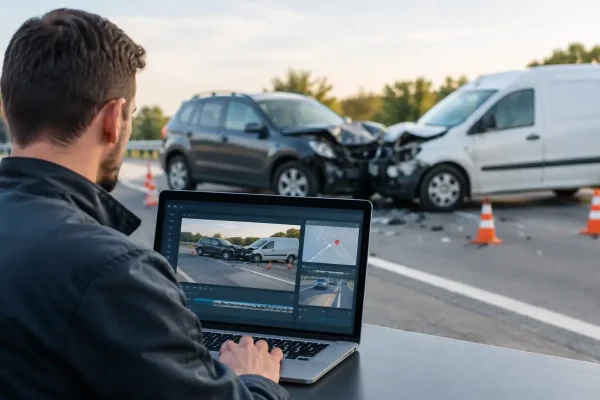
A collision can create uncertainty long before it creates a repair estimate. A driver may be unable to call. A rental customer may offer an incomplete account. A vehicle may be moved before the fleet team knows there was an impact. Fleet crash detection software closes that gap by turning vehicle signals into a verified incident record that supports a faster, more confident response.
For fleet operators, the value is not simply knowing that an impact occurred. It is knowing which vehicle was involved, where it happened, how severe it may have been, what the vehicle was doing immediately before the event, and what actions the business took next. That is the difference between another alert in a dashboard and an operational truth layer for vehicle safety.
What Fleet Crash Detection Software Should Actually Do
Basic telematics can report harsh braking, sudden acceleration, or a sharp change in direction. Those signals are useful, but none proves a collision on its own. A pothole, curb strike, dropped phone, aggressive maneuver, or rough road can all produce data that looks unusual.
Effective fleet crash detection software evaluates a combination of signals to identify a likely incident. Depending on the connected vehicle and hardware configuration, that can include impact force, acceleration changes, vehicle speed, location, direction of travel, ignition status, and the sequence of events before and after an impact. The objective is to separate a genuine collision from ordinary driving noise.
That distinction matters because every false alert consumes time. Dispatch teams lose confidence when alerts require constant manual review, and drivers can become frustrated when they are contacted over events that were not accidents. At the same time, an overly conservative system can miss lower-speed impacts that still create injury, vehicle damage, or claims exposure.
The right approach is not a single sensitivity setting. It is a verification process designed around the fleet’s operating environment, vehicle types, risk profile, and response requirements.
Detection is only the first step
A crash alert should launch a documented workflow, not end with a map pin. The fleet team needs clear incident details, a defined notification path, and a record of what happened after the alert was received.
For a commercial fleet, that may mean notifying a safety manager, checking on the driver, escalating to emergency services when warranted, and preserving trip data for a post-incident review. For a rental operation, it may mean verifying customer safety, assessing whether the vehicle can remain in service, arranging recovery, and preparing documentation before the vehicle returns. For an insurer or dealership service department, verified timing and condition data can reduce disputes and direct the next conversation.
A useful system connects detection, verification, response, and documentation in one operating flow.
Why Verified Crash Data Changes Fleet Economics
The immediate priority after a serious collision is always people. Once drivers, passengers, and other road users are safe, the quality of the incident record shapes nearly every downstream cost.
Without verified data, teams often work from delayed driver reports, uncertain timelines, phone photos, and fragmented emails. The result is slower claims handling, inconsistent vehicle status, more time spent reconstructing events, and greater exposure when facts are challenged.
A verified incident record gives decision-makers a stronger starting point. It can establish when and where an event occurred, identify the vehicle and trip context, capture the vehicle’s movement before the impact, and document notification or escalation activity. That supports safer decisions while the event is still fresh.
This is especially valuable in high-utilization fleets. A vehicle that is incorrectly classified as drivable can create a second incident. A vehicle that is unnecessarily sidelined can reduce availability and revenue. Fleet crash detection software helps teams make those calls with evidence rather than assumptions.
It also improves accountability without turning safety into a punitive exercise. Driver behavior patterns may reveal where coaching, route review, vehicle inspection, or policy changes are needed. The goal is fewer preventable incidents, not simply more reports.
The Incident Workflow That Protects Drivers and Assets
The most effective response process is simple enough to work under pressure. It should be configured before an incident, not built through calls and texts after one.
First, the platform identifies a potential crash and evaluates the available vehicle data. High-confidence incidents should trigger immediate alerts to the appropriate people based on severity, operating hours, and fleet structure. A serious event may require emergency outreach, while a lower-speed impact may begin with a driver safety check and vehicle condition assessment.
Second, the system should preserve the relevant context. That includes the event time, location, route history, speed and movement data, and any available vehicle health indicators. Capturing this information early matters because vehicles continue moving, drivers may change shifts, and recollections become less precise with every passing hour.
Third, the team needs a documented decision path. Was the driver reached? Was emergency assistance requested? Was the vehicle towed, inspected, or placed out of service? Was a claim opened? A consistent record protects the fleet and gives managers visibility into whether response standards were followed.
Finally, the incident should feed operational learning. If similar events happen in the same delivery zone, during a particular shift, or with a certain vehicle class, fleet leaders can investigate the underlying cause. Crash detection becomes more valuable when it informs prevention, maintenance planning, and driver support.
What to Evaluate Before Choosing a Platform
Not every fleet needs the same crash detection configuration. A local service fleet may prioritize driver welfare and rapid supervisor notification. A nationwide rental operator may place more weight on claims documentation, vehicle recovery, and consistent workflows across locations. Dealers managing loaners may need clear chain-of-custody records and faster damage verification.
Start with the quality of the data, not the size of the feature list. Ask how the platform distinguishes a crash from a non-crash event, how it handles uncertain signals, and whether the detection logic is suited to your vehicle mix. A system that produces more alerts is not automatically better if its alerts do not lead to reliable action.
Then evaluate notification design. The right people should receive the right event at the right time, with enough context to act. Alerts that are delayed, sent to an unmanaged inbox, or stripped of relevant vehicle details create more work than value.
Documentation should also be part of the evaluation. The platform should create a clear incident history that can support internal review, customer communication, claims work, and compliance needs. Data locked in disconnected systems forces teams back into manual reconstruction.
Finally, consider the broader vehicle intelligence picture. Crashes do not happen in isolation from maintenance condition, recalls, utilization, location, driver behavior, or ownership status. A standalone alerting tool can identify an event, but a connected platform can show how that event affects the vehicle’s next service decision, availability, lifecycle value, and customer experience.
From Crash Alerts to a Digital Truth Layer
Fleet operators do not need more disconnected data. They need a trusted record that explains the condition and history of every vehicle across its working life.
TrueDNA brings crash verification and IncidentIQ emergency response documentation into a broader Digital Truth Layer for each connected vehicle. That gives fleet teams a clearer view of collision events alongside location, vehicle health, maintenance activity, recalls, driving behavior, and other operational signals that influence safety and cost.
This connected view matters after an incident. A manager can assess whether a vehicle showed warning signs before the collision, whether it has unresolved recall or maintenance considerations, and whether it should be returned to service. It also matters before the next incident, when the same intelligence can identify risk patterns that deserve attention.
The practical standard is straightforward: a fleet should be able to answer what happened, who was notified, what condition the vehicle is in, and what must happen next. When crash detection is built around those questions, it becomes a safety system, an operations system, and a source of defensible facts.
A collision will always demand quick judgment. Give your team verified vehicle intelligence before uncertainty becomes delay, cost, or avoidable risk.