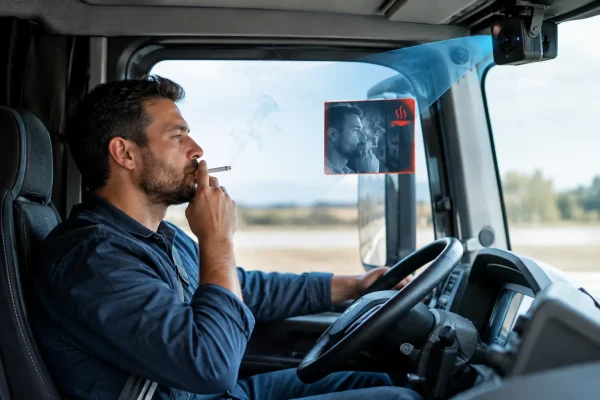
A vehicle returned with smoke odor is not a minor cleaning issue. For rental fleets, dealerships, and commercial operators, it can delay the next reservation, trigger customer complaints, reduce resale appeal, and create a dispute over who caused the damage. In cabin smoking detection gives operators a verified way to identify smoke events while the vehicle is in use, rather than relying on an employee’s judgment after the fact.
That distinction matters. A post-return inspection can confirm an odor, ash, or burn mark, but it rarely establishes when the incident occurred or which driver was responsible. Connected smoke detection creates an event record that can be matched with trip activity, vehicle location, and customer or driver assignment. It turns a subjective conversation into an operational fact.
Why In Cabin Smoking Detection Matters
Smoking and vaping can leave behind more than an unpleasant smell. Residue settles into upholstery, headliners, ventilation systems, and cabin filters. A quick detail may improve the appearance of a vehicle, but odor can return when the cabin heats up or the HVAC system runs. The result is repeat cleaning, vehicle downtime, and an experience the next customer notices immediately.
For rental operations, the financial exposure compounds quickly. One contaminated vehicle may require intensive cleaning, filter replacement, odor treatment, and lost utilization while it is held out of service. If the customer challenges a smoking fee, staff may have little more than an inspection note and a photo taken after the vehicle was returned.
Dealerships face a related issue with loaner fleets, test-drive vehicles, and trade-ins. A smoke-affected loaner can undermine the service experience. A vehicle accepted as a trade-in may require more reconditioning than expected. Commercial fleets may also need to enforce internal safety policies, protect vehicles shared among employees, and preserve clean cabins for passengers or sensitive equipment.
The operational problem is simple: smoke is costly, but unverified claims are difficult to enforce. Detection closes that evidence gap.
From Smoke Alert to Verified Incident Record
Effective in-cabin detection is not designed to replace human judgment. It is designed to give teams a timely, objective signal that prompts the right action. When a compatible sensor detects cigarette smoke in the cabin, the platform can log the event and associate it with the vehicle’s connected record.
That record becomes more useful when it is viewed alongside the rest of the vehicle’s Digital DNA: trip history, GPS location, ignition status, assigned driver or renter, vehicle condition, maintenance activity, and prior incidents. A smoke alert on its own is an operational notification. A smoke alert connected to verified vehicle context is evidence that can support a recovery decision, a cleaning workflow, or a customer conversation.
For example, a rental operator can see that a smoke incident occurred during an active rental, at a specific time, before the vehicle entered a return location. The team can inspect the vehicle promptly, document the condition, and apply its published smoking policy with greater confidence. If no further signs are found, the operator can review the event rather than automatically charging a customer.
That last point is essential. Detection should support fair enforcement, not indiscriminate fees. Sensor data provides strong operational intelligence, but a well-run process still includes inspection, policy consistency, and a clear path for handling exceptions.
Faster action protects utilization
The value of an alert often depends on how quickly it reaches the people responsible for the vehicle. If an incident is only discovered days later, odor may have spread deeper into materials and the vehicle may already be scheduled for another customer.
With an immediate alert, operators can flag the asset for inspection at the next practical touchpoint. A vehicle near a branch can be routed to cleaning. A loaner can be held before reassignment. A fleet manager can review whether a driver should receive a policy reminder or whether the event requires escalation.
The goal is not to create more alerts for staff to manage. The goal is to direct attention to the vehicles that need it most, before a cabin issue becomes a utilization problem.
What Fleet Leaders Should Evaluate
Not all smoking detection programs create the same operational value. Fleet leaders should evaluate the full workflow, not just whether a device can recognize smoke.
First, consider event confidence. The technology should be designed to distinguish relevant smoke incidents from normal cabin conditions as reliably as possible. False alerts create unnecessary inspections and can erode employee confidence in the system. At the same time, no sensor should be treated as the sole basis for an automatic penalty without a documented review process.
Second, assess context. An alert is more actionable when it includes the vehicle, timestamp, trip status, and location. If teams must open separate systems to find a rental agreement, driver assignment, or vehicle movement history, response slows down and evidence becomes fragmented.
Third, look at workflow fit. A rental fleet may need alerts tied to reservation and return processes. A dealer may prioritize loaner tracking and reconditioning workflows. A commercial fleet may need policy enforcement and driver coaching. The technology should serve the operator’s actual decisions, not force teams to build manual workarounds.
Finally, consider documentation. When a charge, internal policy action, insurance discussion, or customer dispute occurs, the ability to show a consistent incident record matters. The strongest programs preserve the evidence trail from alert to inspection outcome, including notes, images, cleaning actions, and resolution status.
Smoke Detection Is a Customer Experience Tool
It is easy to frame smoke detection only as a cost-recovery tool. That misses a larger opportunity. Clean, odor-free vehicles are part of the product customers believe they are receiving, whether they are renting for a family trip, borrowing a dealer loaner, or riding in a company vehicle.
A customer who enters a smoke-affected cabin may question the cleanliness of the entire operation. They may also worry about allergens, respiratory sensitivity, or whether the vehicle was properly maintained. The complaint can become especially damaging when the next renter believes they are being blamed for an existing condition.
Verified detection helps protect both sides. Operators gain earlier visibility into a potential violation, while customers benefit from clearer records and more consistent inspections. When a vehicle’s condition is supported by time-stamped intelligence rather than memory alone, the process is more defensible and more transparent.
This is also where fleet policy matters. Customers and drivers should understand smoking restrictions before they take possession of the vehicle. Fees, inspection practices, and dispute procedures should be communicated plainly. Detection technology works best as part of a fair operating standard, not as a surprise mechanism at the end of a trip.
Building Smoke Events Into the Digital Truth Layer
Smoke incidents should not live in an isolated dashboard. They belong in the same vehicle intelligence platform that captures location, maintenance, recalls, driving behavior, collisions, and ownership-related activity. A unified record gives operators a clearer picture of vehicle condition across its lifecycle.
TrueDNA uses this approach to help operators turn connected events into actionable intelligence. With capabilities such as Bosch RideCare smoke detection, a detected incident can be viewed within the broader Digital Truth Layer for the vehicle. Teams do not have to choose between safety intelligence and day-to-day fleet operations. They can work from one verified vehicle record.
That integration has practical value beyond a single cleaning event. Repeated smoke alerts in the same vehicle may signal a policy issue, a particular route or user pattern, or a need for closer inspection. A vehicle with frequent cabin-condition incidents may require different utilization controls. For a dealer, a smoke event can inform reconditioning planning and help protect used-vehicle margin before the car reaches the sales lot.
The data should also remain proportionate to the decision. Not every event needs escalation. Some require only a routine inspection. Others may justify a cleaning fee, a driver conversation, or a temporary vehicle hold. The intelligence layer gives teams the facts needed to make that call consistently.
A Better Standard for Cabin Accountability
The best fleet technology does more than tell operators where a vehicle is. It helps them understand what happened to it, when it happened, and what action should follow. In-cabin smoking detection brings a once-subjective condition issue into a documented operating process.
For organizations managing high vehicle turnover, that can mean fewer avoidable cleaning costs, less downtime, stronger policy enforcement, and better protection of the customer experience. For every operator, it supports a simple standard: vehicles should return with a clear, verifiable record of their condition.
Start by mapping the moment a smoke alert would enter your current process. If your team can connect that alert to the driver, trip, inspection, and resolution without chasing data across systems, you are building the accountability that keeps fleet assets clean, available, and ready for the next customer.